Follow Us |Facebook
Call or Text for a Consultation



Recent Blog Posts
Study: Medical Errors Now Third Leading Cause of Death in U.S.
 In 1999, the medical community was rocked by a report prepared by Institute of Medicine which classified the problem of medical errors as an epidemic. That report concluded that approximately 95,000 people died each year from preventable medical mistakes. The annual cost to medical facilities was determined to be between $17 billion and $29 billion. Although the Institute of Medicine’s report inspired much debate over the years regarding what could be done to protect patients, a new report – prepared by researchers from John Hopkins University - found that the medical community may not have had too much success and preventable medical errors are now the third leading cause of death in this country.
Unlike the 1999 report, which only used data from one study, the new report used information collected from four major studies. Two of these studies were from the Agency for Healthcare Research and Quality and the Agency for Healthcare Research and Quality, during the years 2000 to 2008.
Statute of Limitations vs. Statute of Repose in Illinois Malpractice Cases
 An Illinois appeals court has ruled that families of plaintiffs who die with a pending medical malpractice lawsuit can add a wrongful death claim to the lawsuit. As one might expect, such an addition is possible if the death is alleged to be related to the action in question in the original malpractice suit.
The case was heard by the three-judge panel, and involved an Illinois woman who was being treated at the University of Chicago Medical Center and several of its affiliates, as well as two other medical centers, between the years 2007 through July 2009. In 2011, the woman filed a lawsuit against all parties, alleging that they failed to diagnose her condition as central nervous system lymphoma. The filing of the lawsuit was within the two-year statute of limitations, as well as the four-year statute of repose required by the state of Illinois.
An Illinois appeals court has ruled that families of plaintiffs who die with a pending medical malpractice lawsuit can add a wrongful death claim to the lawsuit. As one might expect, such an addition is possible if the death is alleged to be related to the action in question in the original malpractice suit.
The case was heard by the three-judge panel, and involved an Illinois woman who was being treated at the University of Chicago Medical Center and several of its affiliates, as well as two other medical centers, between the years 2007 through July 2009. In 2011, the woman filed a lawsuit against all parties, alleging that they failed to diagnose her condition as central nervous system lymphoma. The filing of the lawsuit was within the two-year statute of limitations, as well as the four-year statute of repose required by the state of Illinois.
Filing Limitations
Common Child Safety Seat Errors
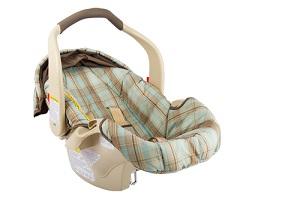 As summer approaches – and with gas prices significantly lower than they have been in previous years – families will be taking to the roads to enjoy day trips and vacation outings. For parents with young children, one of the most important items they will have in their vehicles is the child safety seat that they depend on to keep their little one safe in the event of a car accident. National statistics, however, reveal that four out of every five safety seats on the road are not being used correctly – leaving their tiny occupants at serious risk.
Seat Base Too Loose
The most common mistake that parents make when installing child safety seats is not making the base of the seat tight enough. A good test to see if the base is installed property is to grab the base on both sides – in the areas where the seat belt is looped through – and try to move it. The base should not budge more than an inch on either side or when being pulled forward. If the base moves, it is not installed correctly. Car seat safety inspectors recommend placing your knee on the base and putting your weight on it, while tightening the seat belt. If you are installing an infant seat, use your elbow during this step. When the belt is as tight as it can go, it is critical to make sure the seat belt locks. This is another step that many parents forget, which can have tragic consequences in the event of an accident.
Can a Concussion Increase Suicide Risk?
 One of the most common accident injuries people suffered is a concussion. According to national statistics, approximately three million people are in some kind of incident that results in a concussion. Some, of course, are extremely serious and can have an immediate impact on the victim' life. Even a mild concussion can have long-term side effects, but those effects may be even more serious than previously thought. A new study has concluded that people who suffer from even one concussion may be three times more likely to commit suicide several years later.
The study was conducted by researchers from the University of Toronto. The study’s organizers spent 20 years tracking the history of 236,000 victims of concussions. On average, the study found, 31 out of every 100,000 concussion victims eventually took their own lives. Interestingly, concussion victims who had suffered their injuries on a weekend had an even higher risk of committing suicide, at a rate of nearly four times the national average.
How Safe Is Your Child in the Backseat?
 During the 1990s, airbags became standard equipment in virtually all passenger vehicles sold in the United States. This led to the National Highway Traffic Safety Administration (NHTSA), as well as auto manufacturers and other government agencies, to advise parents to keep young children in the backseat. In the event of a car crash, the backseat is supposed to be the safest place for children.
Dangerous Positioning
Regulators and experts have offered such advice because airbags – although a potential life saver for a front-seat adult occupant in the event of a crash – can seriously injure, even kill, young children if the airbag deploys while the child is in the front seat. This is because the force of the explosion of the bag, which is approximately 200 m.p.h., can be withstood by an adult body, but to the small bones of a child, that force can be crushing.
Seat Failure and Collapse
How Safe Is Whole Body Cryotherapy?
 Many of us are counting down the days until spring and the arrival of warmer weather. By February and March, most are ready to say goodbye to winter and its freezing temperatures, so it may hard to imagine that there are people who purposely expose themselves to temperatures as cold as 200 degrees below zero Fahrenheit. However, this is exactly what people are doing during a whole body cryotherapy (WBC) session, but after the recent death of a 24-year-old woman, many are beginning to ask just how safe is this latest fad?
What Is WBC?
Regular cryotherapy is based on the concept of applying ice to injuries, which helps with pain and swelling. A WBC session involves standing in a chamber where the temperature is dropped to anywhere between -184 and -264 degrees Fahrenheit. Participants, who are barely clothed during the session, stand in the chamber for two to three minutes, surrounded by either refrigerated air or liquid nitrogen.
Are You Covered for Injuries Sustained in a Ridesharing Crash?
 More and more people are turning to ridesharing companies – such as Uber and Lyft – instead of taxicab services, mainly because the ridesharing fees are less expensive than taxis and wait-times are often much shorter. As cab companies continue to feel the economic pinch of the competition, they have become more aggressive in campaigning to convince commuters why they should avoid ridesharing companies, even to the point of presenting ridesharing as being no safer than hitchhiking.
One of the alleged problems that taxicab organizations point out is that if a person is injured in a ridesharing car crash, there is a good possibility that the driver will not have enough auto insurance to pay for the victim’s medical bills, loss of wages, and any pain and suffering. But is that statement really accurate?
Limited Private Insurance
NHTSA: Motor Vehicle Fatalities on the Rise in 2015
 There was positive news in 2014, which saw a decrease in traffic fatalities from the year before. Unfortunately, that is not a trend that appears to be taking place in 2015. Instead, national statistics are pointing to an increase in vehicle accident fatalities.
According to the National Highway Traffic and Safety Administration (NHTSA), the total number of traffic accident fatalities in 2014 was 32,675. However, the number of people killed in the first six months of 2015 was 8 percent higher than the number of fatalities for the first six months of 2014. The NHTSA uses data from its Fatal Analysis Reporting System (FARS).
The NHTSA says that the majority of these fatal accidents are preventable and are caused by drivers’ deadly behaviors, such as speeding and distracted driving. For example, data from 2014 fatalities reveal that:
- Alcohol-related crashes were involved one-third of all fatal crashes, responsible for the deaths of just under 10,000 victims;
Just How Safe Is That Zipline?
 The activity of ziplining has soared in popularity over the past several years. Originally utilized by scientists and researchers exploring the dense jungles of Central and South America, ziplining has become fully mainstream, with many thrill seekers seeing it as a “safe” alternative to flying activities, such as hand gliding. As the cold weather sets in across the Midwest, many traveling to warmer destinations for the holidays may have the opportunity to clip on and try ziplining for the first time.
What is Ziplining?
Ziplining works like this: a person wears a harness which is then connected to by pulley system to a cable which runs high above the ground. According to statistics, there are more than 700 ziplines worldwide, and more than 200 of those lines are right here in the United States.
With more and more people venturing onto ziplines, there have been thousands of people who have been injured while participating in the activity. On study puts the number of people injured in ziplining accidents at more than 17,000 in the past 16 years. However, the majority of those injuries occurred just in the past four years.
Illinois Number Four Nationwide in Dog Bite Insurance Claims
 We Americans love our dogs. In fact, statistics say that more than half of all U.S. homes have at least one dog, and currently there are between 70 and 80 million dogs in this country. But as much as we love our dogs, there are numerous incidents that result in a person becoming the victim of a dog bite. The Centers for Disease Control and Prevention (CDCP) puts the number of people who are bitten by dogs every year at over 8 million. Approximately 890,000 of those victims require medical treatment, and more than half of those victims are children.
And it is not just dog bites that require medical attention. People can also become injured if a dog jumps on them, or knocks them down. This can be especially dangerous to elderly victims and children.
A recent study conducted by the Insurance Information Institute (III) reveals that one-third of the total amount of homeowner insurance claim dollars which were paid in 2014 were for paid to victims who had been injured by a dog. The total amount paid to these victims was over $530 million. The study found that although the number of claims decreased from the year before, the average cost per claim increased.
Location
9631 W. 153rd St., Suite 32,
Orland Park, IL 60462
Phone
708-966-2408
Social Media

Contact Us Today
Call our office at 708-966-2408 or fill out our online contact form to get legal help with criminal defense or personal injury matters.
 The use of the Internet or this form for communication with the firm or any individual member of the firm does not establish an attorney-client relationship. Confidential or time-sensitive information should not be sent through this form.
I have read and understand the Disclaimer and Privacy Policy.
9631 W. 153rd St., Suite 32, Orland Park, IL 60462
708-966-2408

